

Most people don’t fill out contact forms on their first visit to a website. They close the tab, forget about it, and move on. But ask them a question — something that feels personal, relevant, and a little fun — and suddenly they’re paying attention. That’s the quiet power behind quiz lead generation, and it’s changing how online businesses attract and convert their ideal customers.
Why Traditional Lead Magnets Are Losing Their Edge
For years, the go-to approach was simple: offer a free ebook, a discount code, or a whitepaper in exchange for an email address. And it worked — until it didn’t. Inboxes got crowded, users got skeptical, and attention spans got shorter.
Today’s online shoppers want more than a download they’ll never open. They want an experience. They want to feel like a brand actually understands them before asking for anything in return.
That’s exactly why quiz lead generation has become one of the most effective tools in modern digital marketing. A well-crafted quiz doesn’t feel like a form — it feels like a conversation. And that shift in perception makes all the difference.
What the Data Says About Interactive Quizzes
Before going further, it helps to look at what the research actually shows.
According to an analysis of over 50,000 interactive forms conducted by Outgrow, interactive experiences — including quizzes — achieve an average conversion rate of 47.3%, compared to just 2.8% for traditional static forms. That’s a 16.9x improvement in conversions.
The platform Riddle, one of the earliest quiz-based lead generation tools (around since 2014), found that adding a lead form to a quiz can average up to 55% opt-in rates — roughly 25 times better than a standard pop-up form.
Meanwhile, Interact’s 2026 Quiz Conversion Rate Report confirms that overall quiz conversion rates have held steady at around 40.1%, with problem-identification quizzes — the kind that help users understand a specific challenge they face — performing best.
Also Read: How To Leverage Hiring Incentives To Reduce Payroll Costs
These aren’t small gains. They represent a structural shift in how audiences respond to lead capture.
How Quizzes Qualify Leads — Not Just Collect Them
One of the biggest advantages of quiz lead generation over traditional forms is what happens before someone submits their email address. By the time a quiz taker reaches the results page, they’ve already told you who they are.
They’ve answered questions about their goals, their pain points, their preferences, and their habits. That’s zero-party data — information people voluntarily and knowingly share with you. It’s more accurate than behavioral data collected through cookies, and it’s far more actionable.
Here’s what that looks like in practice:
- Segmentation happens automatically. Someone who answers “I’m dealing with severe thinning” versus “My hair is just a little flat” gets routed to different product recommendations and enters different email sequences from the start.
- Follow-up feels personal, not generic. When you know what a lead wants, your first email can reference their specific situation — which dramatically improves open rates and click-throughs.
- Your sales funnel filters itself. People who complete a quiz are already engaged. They’ve invested 3–5 minutes in your brand before giving you their contact information. That level of commitment makes them significantly higher-quality leads than someone who filled in a pop-up form to get a 10% discount.
According to Digioh’s research on e-commerce quizzes, BedGear saw a 490% increase in conversions after implementing a personalized product recommendation quiz, with quiz participants 4.9 times more likely to purchase than non-participants. Similarly, Litter-Robot by Whisker saw a 388% increase in conversions within 30 days of launching their guided selling quiz.
The E-Commerce Opportunity: Quizzes as a Sales Tool
For online retailers, the e-commerce lead generation quiz is particularly powerful. Shoppers often arrive at a product page without knowing exactly what they need. A quiz solves this problem elegantly.
Instead of forcing a visitor to scroll through 50 products and guess which one fits their situation, a quiz asks a few targeted questions and delivers a tailored recommendation. The visitor gets a better experience. The brand gets a qualified lead with valuable data attached to it.
Why Product Recommendation Quizzes Work So Well for E-Commerce
People trust recommendations that feel personal — and quizzes deliver exactly that. This approach works especially well when:
- Choosing the wrong product is frustrating — haircare, skincare, supplements, and fitness gear all require matching the right solution to the right person
- Your product catalog is large — a quiz helps shoppers cut through the noise without feeling overwhelmed
- Customers don’t know where to start — a few targeted questions replace endless scrolling with a confident, tailored recommendation
A great example of this in action is the Hair Diagnostic Quiz by REVIV3 Procare. REVIV3 is a clinically tested haircare brand whose entire 3-part system is built around addressing the specific causes of hair thinning and loss. Their product quiz walks users through a short series of questions about their hair concerns, scalp health, and hair care history — then recommends the right combination of their Prep, Prime, and Treat products based on those individual answers.
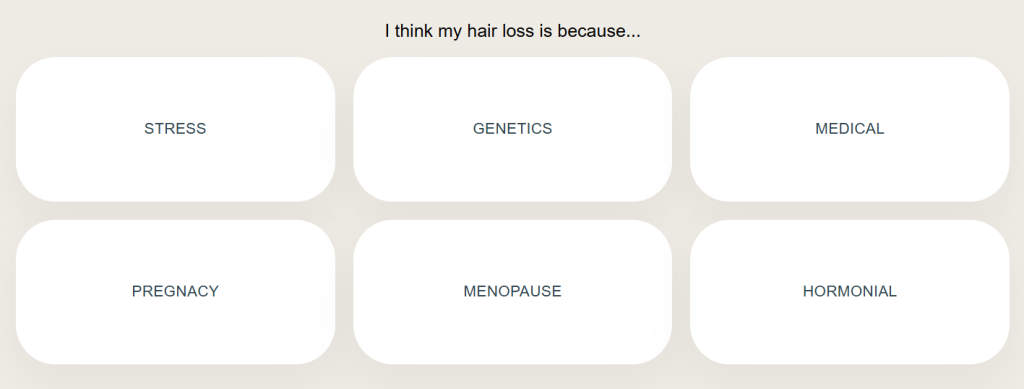
The quiz mirrors the experience of talking to a knowledgeable stylist — it builds trust before a purchase and collects data REVIV3 can use to personalize follow-up communications. The brand’s clinical study found that 81.8% of participants would use the product again, and 78.8% would recommend it to others. When a quiz routes shoppers to the right solution from the start, those numbers make perfect sense. It serves the customer first, and the conversion follows naturally.
How to Generate Leads With a Quiz: The Core Elements
If you want to generate leads with a quiz ecommerce strategy and actually see results, the quiz itself needs to be built around a few non-negotiable principles.
Start With a Problem, Not a Product
The best quizzes don’t open with “Which product is right for you?” They open with “What’s your biggest challenge right now?” or “What’s your hair type?” This shift in framing matters enormously. People don’t care about your products initially — they care about their own problems. A quiz that acknowledges their situation earns their trust before anything else.
Make the Results Feel Earned
By the time someone finishes a quiz, they should feel like the result genuinely reflects what they shared. Vague, generic results feel like a bait-and-switch and destroy trust. Specific, personalized results — especially when tied to a clear recommendation — feel like genuine value.
Place the Lead Form at the Right Moment
The optimal placement for a lead capture form in a quiz is between the final question and the results page. At this point, the user has invested time and is emotionally engaged — they want to know their result. According to the research from Riddle, this is when opt-in rates peak. The ask feels fair because the payoff is immediate.
Three Types of Quizzes That Drive the Best Results
Not all quizzes generate leads equally well. Here are the formats that consistently perform:
- Product Recommendation Quizzes — These guide users toward the right product based on their needs. Ideal for e-commerce brands with multiple SKUs or complex product lines. These are particularly effective for generating leads with quiz ecommerce strategies because they mimic the experience of in-store personalized assistance.
- Assessment or Diagnostic Quizzes — These help users understand where they stand on a particular issue (e.g., hair health, skin condition, fitness level). They position the brand as a knowledgeable resource and build credibility before pitching anything.
- Problem-Identification Quizzes — These reveal a specific challenge the user may not have fully recognized. This format has been trending since 2024, according to Interact’s data, because it creates a compelling “aha moment” that motivates action.
FAQ
1. What is quiz lead generation, and how does it work? It’s the practice of using interactive quizzes to collect contact information and qualify potential customers. Users answer targeted questions, then share their email to receive personalized results — giving brands a qualified lead with real preference data attached.
2. How effective are quizzes compared to traditional lead forms? Significantly more effective. Interactive quizzes convert at 40–55%, versus 2–3% for static forms. Quiz completers are also more engaged and higher-intent than typical form submitters.
3. What makes an e-commerce lead generation quiz successful? Starting with the customer’s problem, asking specific questions, delivering genuinely personalized results, and placing the lead form just before the results page. Email marketing integration for follow-up segmentation is also essential.
4. What kind of data can I collect through a product quiz? Zero-party data — information users knowingly share, including pain points, preferences, goals, and habits. It’s more accurate than cookie-based tracking and directly actionable for email campaigns and product recommendations.5. Can any type of e-commerce brand use a quiz for lead generation? Yes, but it works best when product selection is complex or personalized — haircare, skincare, supplements, fitness gear, and similar categories where customers often don’t know where to start.