


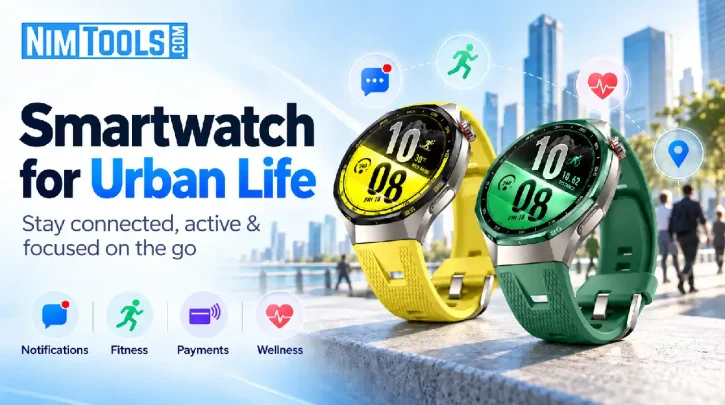
The Smartwatch as an Urban Necessity
In fast-paced urban environments, managing time, health, and connectivity simultaneously has become a daily challenge. Wearable technology has stepped into this gap, offering a compact wrist-mounted interface that keeps people informed without pulling them into smartphone distractions. The HUAWEIGT 7 embodies this role—sleek enough for city life, capable enough for urban fitness, and smart enough to manage daily notifications.
Also Read: How to Find Great Yearbook Quotes
For city dwellers who navigate crowded streets, public transit, and packed schedules, a wrist-based information hub reduces the number of times they need to pull out a phone throughout the day. This small behavioral change adds up: fewer distractions, more present walks, and a more mindful experience of urban spaces.
Notification Management and Focus
A smartwatch’s greatest value may not be its fitness sensors but its ability to filter smartphone noise. By displaying only essential alerts on the wrist, users can keep their phones tucked away while still knowing when something truly matters. Calls, messages, calendar reminders, and weather alerts are delivered discreetly, allowing more focused engagement with surroundings. This subtle but powerful function reduces digital overload and supports more present, mindful daily living.
In a city where constant pings and notifications compete for attention, the ability to triage communications at a glance—declining a non-essential call, replying briefly to a message, or deferring a notification until later—protects valuable mental energy. The watch becomes a gatekeeper for digital attention, ensuring that interruptions only happen when they genuinely warrant immediate response.
Urban Fitness on the Go
City dwellers often fit workouts around irregular schedules—morning runs before work, lunchtime walks between meetings, evening gym sessions after a long day. A smartwatch that adapts to these fragmented routines tracks activity whether it is a structured gym session or a casual walk between appointments. The huaweigt 7 automatically recognizes common workout types and records relevant metrics without requiring manual start-and-stop management, ensuring that activity data stays consistent regardless of how irregular the schedule may be.
Urban fitness often takes creative forms: stair climbing instead of an elevator, a brisk walk to the next meeting, a weekend jog along a riverside promenade. The wearable captures all of these activities, giving a full picture of daily movement that encourages an active urban lifestyle.
Payments and Convenience on the Wrist
Contactless payment support turns a smartwatch into a wallet replacement for small purchases. Grabbing coffee, buying transit tickets, or picking up snacks during a run becomes effortless with a wrist tap. This convenience is particularly valuable in urban settings where carrying a phone can be cumbersome. Combined with music storage that supports wireless earbuds, the watch truly becomes a standalone companion for short outings. No need to stuff a phone in a pocket or carry a wallet—just the watch and a pair of earphones. This minimal-carry approach aligns perfectly with the urban desire for light, unencumbered mobility through crowded streets and public transport.
Conclusion: Wrist-Mounted Efficiency
Urban life rewards efficiency. A wearable that handles communication, payments, navigation, and health tracking in one compact device eliminates the need to juggle multiple gadgets. For city residents who value both convenience and well-being, finding the right smartwatch is not about luxury—it is about practicality. It is about reducing friction in daily routines, staying connected without being constantly distracted, and maintaining health habits amid the chaos of city life. To experience how this wearable enhances everyday urban routines, visit the official product page and explore its full feature set designed specifically for the modern metropolitan lifestyle.
The Digital Minimalism Movement and Wearables
Ironically, as people seek to reduce screen time and digital distractions, wearables have become an essential tool for achieving that goal. A smartwatch that filters notifications and surfaces only what matters allows users to keep their phones away without missing critical communications. This intentional use of technology—using it to manage rather than be managed by it—aligns with digital minimalism principles. By moving essential interactions to the wrist, the phone stays in a pocket or bag, reducing the temptation to scroll mindlessly. The result is a more focused, present experience of urban life, with technology serving as an assistant rather than a constant distraction.
Also Read: The Sweet Spot of Digital Reading
Urban living presents unique challenges to health: prolonged sitting, air pollution, sedentary commutes, and constant digital stimulation. Yet cities also offer remarkable opportunities—running trails, gyms, walking-friendly neighborhoods, and communities of active people. A smartwatch helps urban dwellers navigate these challenges and seize these opportunities by making their daily movement visible, encouraging small acts of activity that add up over time. In the concrete jungle, a wrist-worn health companion helps bring balance to busy city life.
This is the quiet promise of wearable technology: to make health management feel less like a chore and more like a natural part of moving through the city. Small improvements, accumulated daily, create lasting urban wellness.