

There’s a secret choreography to skincare: morning rituals that whisper “ready for the day” and evening rituals that murmur “repair and restore.” If your brand can reflect that rhythm visually, you don’t just sell a product — you map people’s routines. Start your visual experiments with an AI photo generator to quickly audition how textures read under daylight versus lamplight, then use those mood studies to build adaptable ads that feel personal at every hour. Dreamina makes the creative loop faster: draft, iterate, and publish context-aware visuals without losing the brand’s luminous thread.
Skincare marketing has always been twice-told: “use in the morning” and “use at night.” But most campaigns still show a single static image that pretends both contexts are identical. Night is not merely darker—skin behaves differently, the product finishes matter, and the emotional frame shifts from performance to comfort.
The two moods you must master
Think of your day/night outfit as your visual language. There must be a reason for everything.
- Day mood (performance)
- The image is sharp and high contrast, emphasising texture and impact.
- Cooler highlights and sun-leaning rim light to suggest vibrancy.
- People in motion—putting on sunscreen, buttoning a shirt—so the product reads as part of action.
- Night mood (ritual)
- Warm or muted color palettes with soft, diffused light to suggest calm.
- Close-up textures—dew on skin, buttery serums—framed slowly to invite touch.
- Quiet moments: a bedside table, a small lamp, a hand massaging cream in circular motions.
These are not opposites; they’re a continuum. Your assets should transition logically between them.
Building blocks: texture, light, and posture
Three variables matter most for skin imagery: how texture reads, where the light falls, and what the subject’s posture communicates.
Texture
- Day: finishes that highlight clarity, from matte to satin.
- Night: luminous, slightly dewy textures that read as nourishing.
Light
- Day: directional, slightly cool; highlights edge and contour.
- Night: there are warm, soothing pools with soft, soft shadows.
Posture
- Day: purposeful—application integrated into routine.
- Night: unhurried—ritualistic and soothing.
Define a concise style guide around these pillars so photographers, designers, and motion artists speak the same visual language.
Narrative beats that convert
Rather than show the bottle and the list of benefits, stage small scenes that imply outcomes.
- A morning mirror glance with a subtle halo on the cheekbone → “ready.”
- A bedside hand-dip into a jar, slow wrist roll → “reset.”
- A split-screen micro-sequence: day texture vs. night texture, same face, different promise.
These mini-stories create memory without heavy copy. When you must use words, keep them as whisper-summaries—tiny tags like “AM — Shield” and “PM — Repair.”
Adaptive creative: same asset, many lives
Design assets to adapt automatically to context—time of day, user settings, or platform environment.
- Color overlays: a single hero image can shift from a cool-vibrant overlay in the morning to a warm, amber wash at night.
- Motion layers: preserve stills while adding soft breath animations (a gradual swelling of the serum’s bead) for narratives and videos.
- Crop logic: a wide shot becomes an intimate close-up for night placements; a clean product shot for day placements.
The trick is to maintain the same geometry and composition so the image reads as the same scene across variants—digital déjà vu that builds trust.
Social-first rituals
Tailor your creative to platform behavior.
- Instagram: carousel that walks users through AM → PM routines, each card a visual cue.
- TikTok/Reels: reverse-time edits that dramatise metamorphosis by playing forward a night ritual and then snapping back to the morning.
- YouTube ads: 6–10 second mini-docs showing a day in a jar: morning protection, evening repair.
Where possible, let the creative reflect the device context: brighter, punchier cuts for daytime social browsing; relaxed, longer frames at night when viewers linger.
Collaborating with product and packaging teams
Campaigns that change by hour should echo product form. If a night cream is heavier, let that density be obvious in motion—slow pours, viscous drips. If day serum absorbs quickly, show an immediacy: fingers glide, no residue.
Also Read: How To Balance Electric Bike Pedal Power And Motor Assistance Effectively
In retail, package finishes that read differently under store lighting (matte vs. satin) reinforce the visual promise. Coordinate with packaging to ensure point-of-sale lighting makes the night edition glow and the day edition pop.
Stickerable moments and physical touchpoints
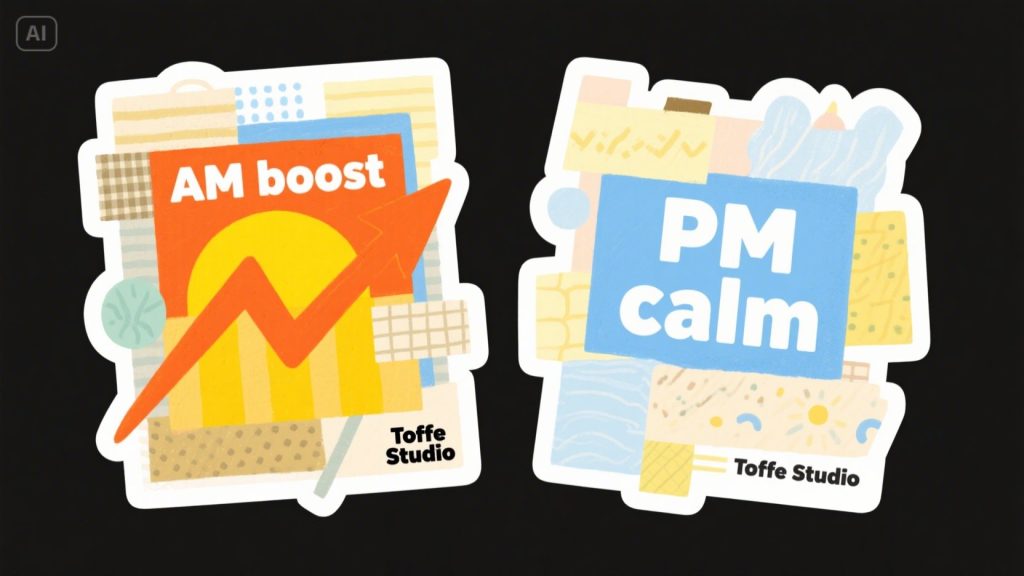
Tiny artifacts extend the ritual. A lineup of small, collectible postcards or mini-samples that mimic the day and night palettes invites fans to engage offline. Prototype a seasonal sheet using Dreamina’s sticker maker—one sticker for “AM boost,” another for “PM calm”—and include them with orders as ritual prompts.
Brand marks that flex
Your mark should feel at home under both sun and lamp. You don’t need a different logo for night, but you do need flexible lockups: one version embossed subtly on nighttime textures, another crisp and flat for daytime clarity. Use Dreamina’s AI logo generator once to iterate lockups that harmonize with both glows and hard edges; choose a mark that can live in shadow or in sun without losing identity.
Twilight toolkit: crafting dual-light magic with Dreamina
Step 1: Compose a text prompt
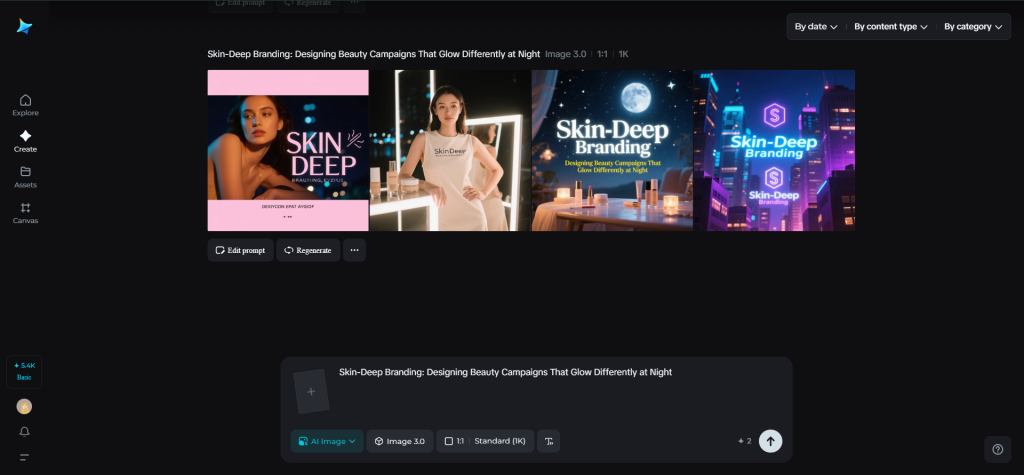
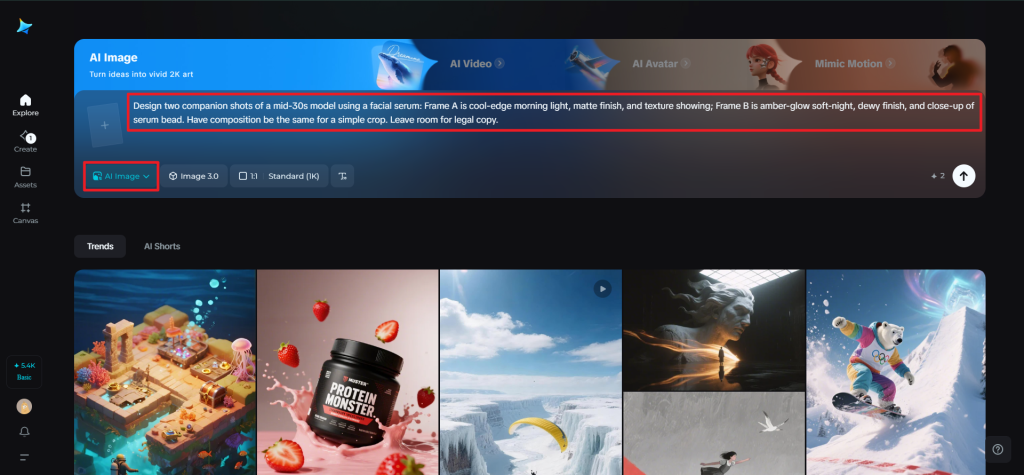
Head to Dreamina and write a thorough prompt embodying both moods in a single brief:
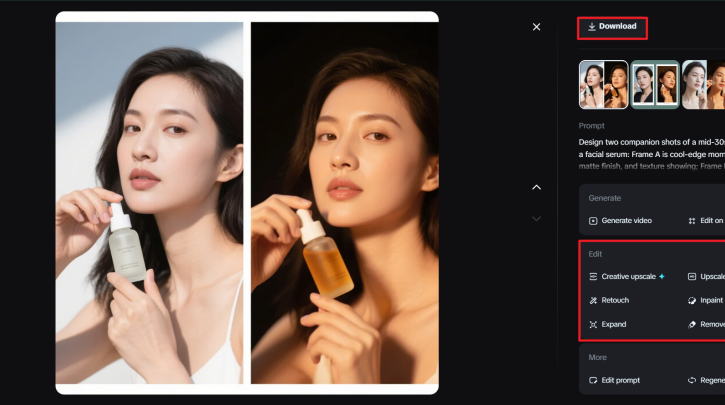
For instance: Design two companion shots of a mid-30s model using a facial serum: Frame A is cool-edge morning light, matte finish, and texture showing; Frame B is amber-glow soft-night, dewy finish, and close-up of serum bead.
Step 2: Modify parameters and generate
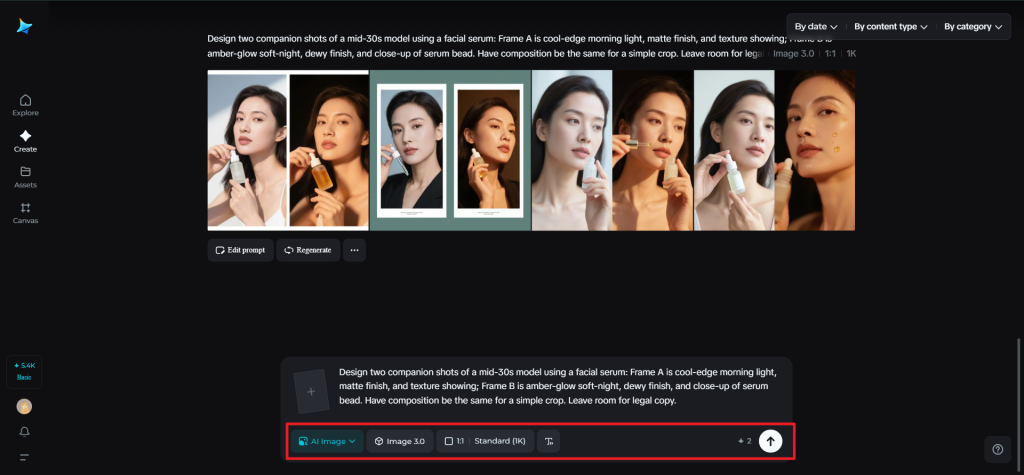
Select the model that models skin textures accurately, set feed, story, and hero-banner aspect ratios, select size, and choose resolution (test explorations 1k, production 2k). Click Dreamina’s icon to create matched pairs that honor your lighting and composition guidelines.
Step 3: Personalize and download
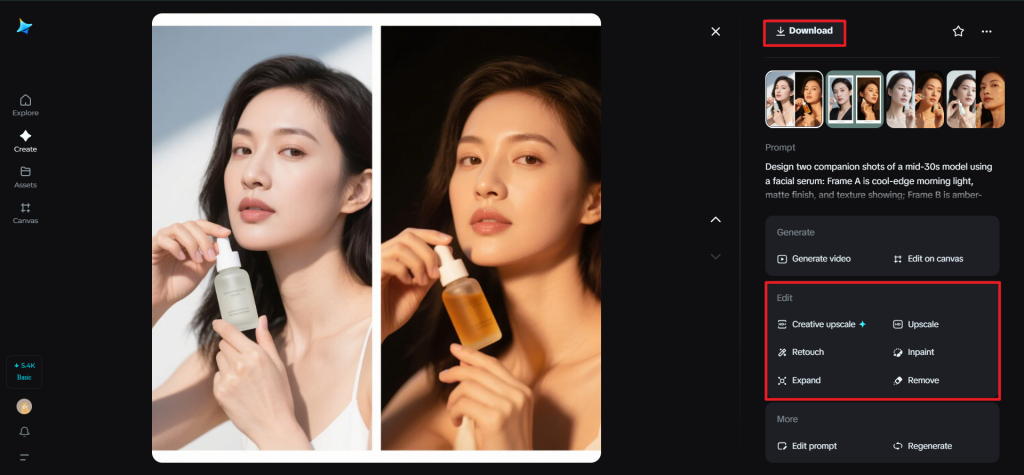
Apply Dreamina’s creative upscale, inpaint, expand, remove, and retouch tools to adjust microdetails—soften a shadow, add dew to the night frame, or eliminate a distracting spec. Now that both frames match visually, click the Download icon to save layered files ready for platform-specific cropping.
Experiments to run this month
- A/B carousel test: same hero image, two color overlays (cool vs. warm). Measure saves and completion rates.
- Time-targeted feed: push the night variant as evening ads and the day variant in morning slots; compare CTRs.
- Sticker drop: include two sample stickers (AM/PM) in early orders and track social shares.
These small experiments help you learn what cues actually persuade different audiences at different times.
Closing the ritual loop
Designing for day and night is more than an aesthetic choice—it’s an invitation to become part of someone’s routine. When your visuals map to lived habits, you’re not just advertising a cream; you’re accompanying a sequence of small, meaningful acts. Dreamina streamlines the creative work so your team can focus on sequencing, not rendering. Evening campaigns that glow and morning campaigns that invigorate will do more than convert—they’ll be welcomed into the ritual. Ready to make your brand radiant around the clock?