

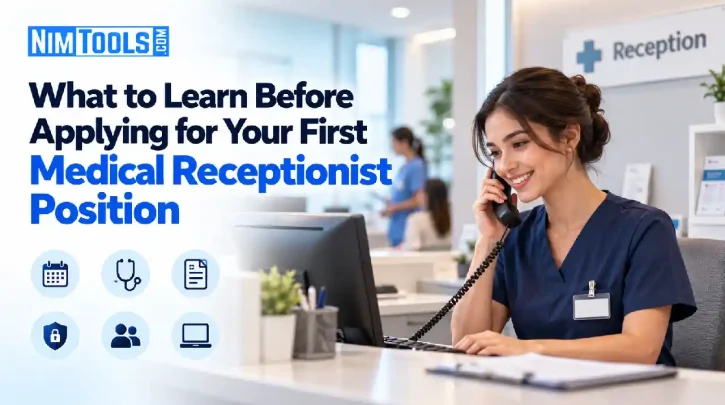
A medical receptionist role can be the first point of contact when a client calls or visits your clinic. Receptionists will handle multiple roles to help ensure the front desk runs smoothly. This can include providing support to clients who may be feeling unwell or anxious, ensuring all client information is kept confidential. You may feel more confident applying for your first role by learning a few key skills and understanding the basics.
Understanding the Role
Depending on the type, size and amount of staff within the clinic, your role can vary. Within a smaller clinic such as physiotherapy or family practice, you may be responsible for checking patients in, scheduling appointments, taking payments, answering calls and completing admin. However, in larger clinics these roles may be split between different members of the team.
To get an idea of what duties will be most common, take a look at a few job postings. If possible, speak to someone within the clinic. Understanding what your days will look like will help you explain why you would be a good fit for the role in an interview. If you want to build relevant knowledge before applying, a medical office administration course can help you develop the administrative skills needed for a healthcare setting.
Basic Medical Terms
While you won’t need the same level of knowledge as clinicians, knowing some basic terms can help. Clients may use clinical terminology to explain why they are attending appointments, being referred or receiving certain services. Knowing some terms such as referral, consultation, follow up, assessment and chronic can help you understand what is being said.
Learning some common prefixes, suffixes and acronyms can help you understand forms and messages. Books from the library, free online resources and short introductory courses can help.
Generally you shouldn’t provide medical advice or interpretation. This is usually something that will be asked to a qualified clinician.
Understanding Client Confidentiality
One of the most important things to understand when working within a clinic is confidentiality. Any information relating to clients including their name, health concerns, appointment details and billing details should be treated as confidential. All healthcare professionals should understand and follow confidentiality laws and policies within the clinic. These will vary depending on the province or country you’re in. For example, in Ontario, Personal Health Information Protection Act (PHIPA) usually covers personal health information. Research what the rules are where you live and understand the basics.
It is also important to understand what you should and shouldn’t do on a day-to-day basis. This can include not talking about clients in public areas, covering up screens and forms, verifying who the caller is before giving out any information and only giving information to those who should be receiving it. Employers may ask how you would handle a confidentiality concern, so having a thoughtful response can help.
Booking and Admin Skills
Booking appointments is a main part of the role. Receptionists will need to balance the needs of clients and practitioners, appointment times, cancellations and walk ins. If not booked carefully, clients may experience long waiting times or missed appointments.
Using an online calendar can help you feel more comfortable with booking appointments, changing appointments and sending reminders. Other admin tasks may include typing accurately, filing, scanning, replying to emails and completing intakes. Many clinics will look for someone who is organised and can multitask. If you have experience in retail, hospitality or customer service you may find many of these skills are transferable.
Insurance and Billing
Billing and insurance questions are common at the front desk. Depending on the clinic you may be responsible for taking co-pays, completing invoices, submitting claims to insurers or explaining what the patient may be covered for.
To start with, it can be helpful to know the difference between public funding, private insurance and paying out of pocket. Knowing some terms such as deductible, co-pay, claims and pre-authorisation can also help. As policies will vary between insurers, you’ll usually want to double check with them or the billing team within the clinic. You don’t need to be an expert in billing however showing you’re keen to learn can make a good impression.
Communication Skills
Clients may be contacting the clinic as they are in pain, anxious or unsure. Having a calm, clear and respectful tone can really make a difference. Being a good communicator will include active listening, highlighting key information such as appointment times and explaining what will happen next in simple terms.
Knowing when to ask for help is also important. If a client is upset, there is a scheduling conflict or the client has suddenly become concerned about their health you may need to refer them to a manager or clinician. Practising good telephone manners and playing through common scenarios with a friend can help boost your confidence. You will be dealing with clients from a variety of backgrounds so patience, empathy and cultural awareness are important. If you are bilingual you may wish to mention this on your resume.
Clinic Software
Most clinics will use electronic systems to book appointments, store patient information, complete billing and communicate. While the software can vary, the basics are often the same. General skills such as using menus, accurately inputting information and searching for patient files can be transferable.
You can also get familiar with using word documents, excel and emails. Some software will offer free demos or tutorials which can help you understand how they work. Many employers will provide training on the software they use. You don’t need to be an expert but showing that you can learn new technology can help.
Working Under Pressure
The front desk can get busy quickly. You may be answering calls while clients are waiting and your schedule may change suddenly. Prioritising tasks, staying calm and taking brief notes can help.
It can also be helpful to understand how the clinic deals with emergencies. If a client seems to be having a medical emergency the team will usually follow the clinic’s protocol. This may include contacting emergency services. Ask about this in an interview or during training.
Application
Once you have a base knowledge, you can showcase this in your application. On your resume you can include skills such as customer service, booking, typing, software and any courses you’ve completed. Having a certificate in medical office administration can be helpful however requirements will vary and many entry level roles won’t require this. Volunteering at a hospital, long term care home or community health centre can also provide useful experience.
When applying for an interview, it can be helpful to be specific. You could mention how you handled a difficult customer, ensured accurate recording or how you prioritised deadlines. Asking questions such as what training you’ll receive, how big the team is and what your day to day will involve shows you’re genuinely interested in the role.
Conclusion
By researching the role, basic medical terminology, client confidentiality, booking, billing, communication and clinic software you can prepare for your first medical receptionist role. You don’t need to know everything as most clinics will provide training on the job. However, showing you have a base knowledge and are patient and keen to learn can make you stand out. With a little preparation, your first receptionist role can be a great way to get into the healthcare industry.