

Organizations are dependent on equipment, facilities and infrastructure that function reliably to maintain productivity. Delays are frequent when maintenance is unorganized or relies on manual processes – these delays make it difficult to meet schedules. Efficiency is often low when teams have missing inspections, incomplete records or gaps in communication.
A computerized maintenance management system or CMMS, is a tool that organizes maintenance operations – this system uses centralized information and automated workflows. Organizations are able to complete tasks more quickly because maintenance teams have access to accurate data.
Centralized Maintenance Information
Information is located in one place within a CMMS – Maintenance teams are not required to look through spreadsheets, paper records or emails. Asset histories, schedules, work orders and inspection records are all present in a single system.
Technicians spend less time gathering information before they begin work. A technician is able to review equipment history and identify previous problems quickly. Access to relevant information is fast, which allows personnel to make decisions without delays.
Improved Work Order Management
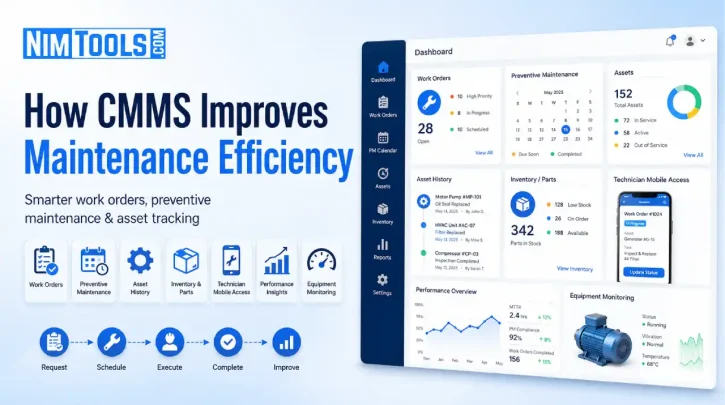
Management of work orders is a primary factor in maintenance success. A CMMS is a platform for the creation, assignment and tracking of work orders. Standardized workflows are used to ensure that tasks are documented clearly.
Supervisors are able to monitor progress in real time – This visibility is helpful for identifying bottlenecks. Team members are able to prioritize tasks and update the status of their work effectively – this approach is organized and reduces confusion.
Better Preventive Maintenance Planning
Strategies for preventive maintenance are effective for reducing equipment failure. A CMMS is a tool for scheduling maintenance based on time, usage or specific criteria – this automation makes it less likely that important activities are forgotten.
Equipment is in better condition when tasks are finished consistently. Maintenance teams are then able to focus on planned activities rather than emergencies. Organizations are more efficient when disruptions to operations are minimal.
Enhanced Resource Allocation
Maintenance objectives are met when resources are distributed well. A CMMS is a source of information regarding technician availability and workload – this data is useful for managers when they assign resources to specific areas.
Idle time is lower when resource allocation is accurate – Maintenance leaders are able to balance workloads so that critical tasks are finished. Management of resources is efficient and leads to the faster completion of goals.
Increased Visibility Into Asset Performance
Metrics and repair histories are available in a CMMS to show how assets perform – this information is helpful for understanding which equipment requires attention. Maintenance teams use this data to focus their efforts.
Trends are visible when data is collected over time – Frequent failures or high costs are addressed before they become large problems. Decision making is based on data, which allows teams to take action and reach targets.
Faster Communication Across Teams
Collaboration is necessary among technicians, supervisors and managers. A CMMS is a shared platform where information is available to all relevant people – this reduces delays that happen when communication is slow.
Notifications and updates are visible within the system – Team members do not have to rely on long email chains. Communication is fast, which helps everyone stay focused on the same priorities.
Improved Inventory Management
Delays are common when parts are unavailable – A CMMS is used to track spare parts and monitor the amount of stock – this visibility is helpful for keeping enough inventory without having too much extra stock.
Repairs are finished quickly when the necessary components are available. Maintenance schedules are more likely to stay on track when inventory issues are rare.
Stronger Performance Monitoring
Progress is measured through key performance indicators in a CMMS – these metrics include completion rates, downtime and costs. Such data is a clear indicator of how effective a maintenance software is.
Managers use performance monitoring to find areas that need improvement. Accountability is higher when tracking is continuous. Organizations are able to adjust their strategies to maintain progress.
Support For Mobile Maintenance Operations
Technicians often work in different locations or large buildings. Mobile access is a feature of many CMMS platforms. Personnel are able to receive assignments and update work orders while they are in the field.
Productivity is higher when technicians do not have to return to an office for updates. Findings and photos are recorded immediately – this efficiency is helpful for completing activities without interruptions.
Better Long Term Maintenance Planning
Planning for the future involves asset replacements and budget requirements. A CMMS is a source of historical data that makes long term planning more accurate. Organizations use this data to make strategic decisions.
Uncertainty is lower when teams understand asset trends – Proactive planning helps maintenance teams prepare for future challenges – this approach is consistent and helps reach goals over a long period.
Integration With Other Business Systems
A CMMS is more effective when the software connects to other operational tools, including enterprise resource planning platforms and procurement systems. Data regarding maintenance moves directly into financial, inventory plus operational records through this connection. Users do not need to enter the same information twice, which reduces the frequency of errors.
Organizations are able to see how maintenance activities influence the performance of the business because the systems are connected. Financial records for repairs, labor and spare parts are automatically consistent with budgets but also forecasts – this structure is coordinated so that maintenance decisions are helpful for financial planning and operational goals.
Data Driven Decision Making
A CMMS improves maintenance planning because the system converts daily operations into organized information for long term planning. Organizations see patterns in equipment failure and high costs as the system collects work orders, repair histories and performance records.
Also Read: Building Custom Sales Automation Using Modern Web Dev Tools
Specific assets that need replacement or processes that require changes are easier to identify with these records. Managers are able to base decisions on consistent evidence rather than on assumptions. Forecasts are more accurate, maintenance tasks are prioritized effectively plus maintenance strategies are consistent with organizational goals.
Conclusion
A CMMS is a tool that helps organizations reach goals – improving organization and communication. Operational efficiency is higher because of centralized information and automated schedules. As maintenance needs grow, a CMMS is a reliable system for daily and long term objectives. The system is a valuable resource for achieving success – allowing teams to be proactive.