

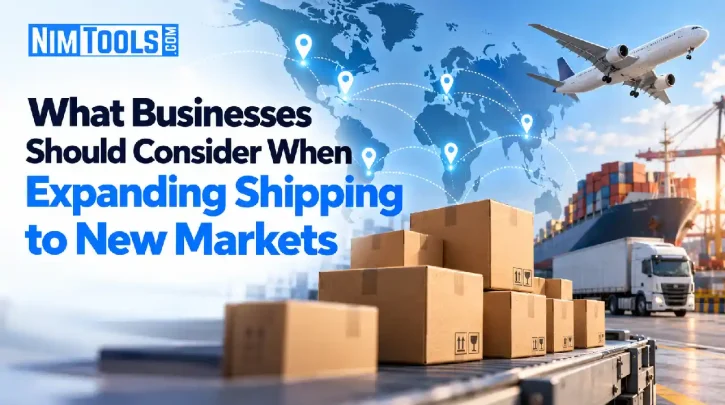
Expanding shipping to new regions is a method for commercial entities to reach a larger quantity of buyers, increase revenue and improve their position against competitors. Entering a different territory introduces logistics, finance and regulation difficulties that may influence delivery speed and buyer contentment. Managers are responsible for evaluating transport prices, the presence of freight companies, border requirements, delivery timelines and local systems before starting operations. A structured plan allows a company to provide services to different buyers while keeping services consistent and protecting the money remaining after expenses.
Market Demand & Customer Expectations
Entities should analyze the need for their goods in target areas before starting expansion. The age and location of buyers, buying habits, regional competitors and specific item choices are useful to identify if a territory has enough financial promise. Management is responsible for checking if goods are appropriate for a location, including differences in weather, box requirements or buyer preferences. Understanding these details helps a company predict how many orders will arrive and if the expected money is greater than the cost to expand.
Expected arrival times are different between various locations. Buyers in some areas require arrival within twenty four or forty eight hours, whereas others are willing to wait longer for items coming from other countries. Organizations are responsible for investigating standard arrival times, preferred freight services, tracking needs and the rules for sending items back. Providing accurate arrival dates before taking money helps avoid buyer frustration and lessens the burden on logistics staff to finish tasks by impossible dates.
Shipping Costs & Profit Margins
Transport expenses are often much higher when a company enters an unfamiliar area. Costs are transit, fuel surcharges, border clearance, taxes on imports, insurance, boxes and the final delivery to the buyer’s door. Items sent across borders are often subject to extra fees for manual movement or locations that are difficult to reach. Financial officers are responsible for calculating the total cost of an item arriving at its destination instead of using only the base price provided by a freight company – this method gives a clearer picture of the financial results of expansion.
Price plans are required to show these expenses without making the goods too expensive for buyers. Certain companies pay for a portion of the transport cost to find new buyers, while others use specific fees for each area or require a minimum purchase amount for free transport. Management is responsible for testing different amounts of orders, delivery methods and return frequencies to see how each situation affects the final profit. Checking the numbers often helps an entity change prices and transport rules as the need for goods grows.
Carrier Selection & Delivery Coverage
Selecting the correct transport partners is vital when entering a new territory. Managers are responsible for checking freight companies based on their reach, speed, consistency, tracking tools, help services and prices. A company that works well in one country is sometimes limited or inconsistent in another. Organizations are also responsible for looking into local delivery providers that understand regional roads, how to write addresses and local habits. Using delivery management software can also help businesses coordinate shipping operations and manage deliveries as they expand into new markets.
Using only one freight company is a risk, especially when moving into areas with poor systems or unpredictable weather. Working with multiple freight companies or a logistics partner provides more choices and helps a company keep moving goods during problems. Managers are responsible for comparing data on how well partners work, signing service contracts and setting rules for arrival times and broken items. Checking these partners often helps find those that do not work well before problems reach many buyers.
Customs Regulations & Compliance
Sending goods across borders requires an entity to understand the border rules for their items and the destination. Depending on the country and the goods, a company is often required to have specific licenses, papers or declarations. Wrong tax labels, incorrect item values and missing papers result in delays, fines, extra costs or the return of the goods. Managers are responsible for confirming these rules before taking orders and ensuring that software creates the correct papers.
Import taxes also change the experience of the buyer and the final price of the order. Management is responsible for deciding if buyers pay the fees when the item arrives or if the company collects the money and pays it early using a specific transport plan. Clear talk is necessary because surprise fees result in buyers refusing the items and leaving the purchase. Speaking with border experts or trade professionals helps a company understand new rules and reduces the risk of breaking laws.
Warehousing & Inventory Management
The place where goods are kept is a major factor in delivery speed and transport costs. A company sending every item from a middle warehouse to a far location will see long wait times and high transit prices. Depending on the amount of orders, regional storage centers or local partners are often a more efficient choice – these plans put goods closer to buyers and make delivery times more consistent.
However, keeping goods in another territory adds more tasks to the operation. Management is responsible for the cost of storage, moving items, predicting stock needs and the risk of items not selling while they are far away. Managers are also responsible for checking how local stock works with current order and warehouse software. Using one central location is often best for testing a new area, while many orders justify using many different storage locations.
Technology & Shipping Visibility
Moving goods across many countries creates more data and the need for more coordination. Managers are responsible for checking if current selling platforms, order software and transport tools work with international addresses, different money types, border papers and local delivery choices. Using software to calculate costs and print labels reduces manual mistakes and connecting to freight company systems keeps facts the same for all staff.
Tracking the items and looking at data is also vital – Managers are responsible for watching arrival times, the price for each order, border delays and return rates – these numbers show where the work needs to improve and if a territory is successful. Accurate tracking facts also help support staff answer questions. As the number of orders grows, software makes the work faster and gives a company more control over how the buyer feels about the service. Businesses can explore delivery management software to support coordination and visibility as shipping operations grow.
Packaging & Product Requirements
Box requirements are often different based on the distance, weather and local rules. Goods moving across borders experience more movement, longer times in transit and more changes in heat or moisture. Managers are responsible for checking if current boxes are strong enough or if extra padding and moisture protection are needed. Boxes are also designed to stop damage without making the item too heavy or too large, which increases transport costs.
A company is responsible for following local rules for labels and boxes too. Some territories require specific languages, safety facts, symbols for recycling or lists of materials. Goods like food, makeup, electronics and dangerous items often have more rules. Checking these rules before starting helps avoid the return of goods and the high cost of changing boxes. Using the same boxes where possible makes the work easier, as long as the design follows the rules of each country.
Returns & Customer Service
A strong transport plan is responsible for including a way to handle returns, swaps and delivery errors. International returns are expensive because a buyer or company is responsible for paying for transit and border fees. Management is responsible for deciding if items go back to the main warehouse, a regional center or a local partner. The best choice depends on the value of the item, how often items come back and the price to process the stock.
Support staff are also responsible for being ready to handle questions about tracking, border delays, broken items and missed deliveries. Workers require the correct facts about the shipment and clear steps for telling freight companies about problems. Rules for returns are required to explain who can return items, the dates, who pays for transport and how long it takes to get money back. Giving these facts before a purchase helps buyers choose wisely and reduces arguments when a shipment has problems.
Conclusion
Expanding transport to different territories requires careful plans for logistics, rules, prices, tools and support. Managers are responsible for checking the need for goods, calculating total costs, choosing the right freight partners and learning local rules before they start. Boxes, returns and tracking also change how reliable and profitable the operation is. By testing the need for goods, watching the data and changing plans as situations shift, a company is able to grow while keeping costs low.