

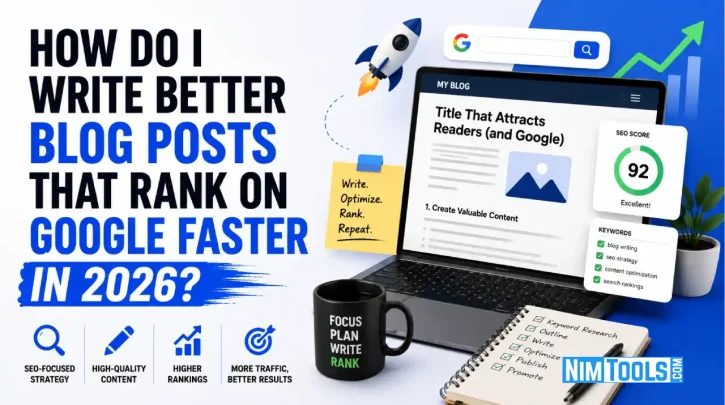
Writing a blog post that Rank on Google is not the same as writing a blog post that reads well. Both matter, but they require different skills and different processes. Most bloggers who struggle to rank are not producing bad content.
They are producing content without a clear understanding of what Google is looking for, who is already ranking for the topic, and how to structure an article that satisfies both search intent and reader experience simultaneously.
In 2026, the gap between bloggers who rank consistently and those who do not comes down to process. The right research, the right structure, and the right tools compress both the time it takes to produce content and the time it takes for that content to climb the search results. This guide covers exactly what that process looks like.
Start With Search Intent, Not Just Keywords to Rank on Google
The single most important shift in SEO content writing over the past three years is the move from keyword targeting to search intent matching. Google has become significantly better at understanding what a searcher actually wants when they type a query, which means articles that technically contain the right keywords but fail to answer the searcher’s real question are increasingly difficult to rank.
Before writing a single word, ask yourself:
- What type of content is Google already ranking for this query? If the top results are listicles, write a listicle. If they are step-by-step guides, write a guide. The format that ranks reflects what users want from that search.
- What stage of the buyer journey does this query represent? Informational queries need educational content. Commercial queries need comparisons and recommendations. Transactional queries need clear calls to action.
- What specific question is the searcher trying to answer? Your article should answer this question more completely and clearly than anything else on the first page.
Matching search intent correctly before you start writing is the highest-leverage action you can take to improve ranking speed.
Research the Topic and Competition Thoroughly
Analyze What Is Already Ranking
Before writing anything, spend time understanding why the current top-ranking articles are where they are. Look at the first three to five results for your target keyword and identify:
- What headings they use and what topics they cover
- What questions they answer that yours should also answer
- What angles or information they are missing that you can add
- How long and detailed their articles are
Using a free AI chat tool dramatically accelerates this competitive analysis phase. Rather than reading through five long articles manually and trying to synthesize what they cover, you can describe the topic and your target keyword and ask for a structured breakdown of the key subtopics, common questions, and content angles that perform well for this type of query.
Chatly gives you access to multiple leading AI models simultaneously, which means the research output you receive is comprehensive, diverse in perspective, and immediately usable as a content planning foundation.
For bloggers producing multiple articles per week, this compression of the research phase from an hour to minutes per article is one of the most significant efficiency gains available in 2026.
Find the Content Gaps
The fastest path to ranking is not producing the same article as everyone else but slightly better. It is finding the specific questions, angles, or depth of information that existing top-ranking articles are missing and building your article around filling those gaps.
Common content gaps worth targeting:
- Specific use cases or examples that generic articles skip over
- Updated information that older ranking articles no longer reflect accurately
- Practical step-by-step guidance where existing articles only offer general advice
- Answers to related questions that searchers commonly have but that existing articles do not address
Structure Your Article for Both Readers and Search Engines
Use a Clear, Logical Heading Structure
Google uses your heading structure to understand the organization and scope of your content. A well-structured article with clear H2 and H3 headings that naturally incorporate relevant keywords and subtopics gives Google a clear map of what your article covers and how thoroughly it covers it.
Every major section of your article should be introduced with an H2 heading that reflects a genuine subtopic of the main query. H3 headings break those sections into specific components. This structure also improves readability, which reduces bounce rate and increases time on page, both of which are positive signals for ranking.
Write an Introduction That Hooks and Promises
Your introduction has two jobs. It needs to confirm to the reader that they are in the right place and it needs to tell them what they will get from reading the rest of the article. Keep introductions concise and focused. Get to the substance quickly rather than padding with background that delays the value.
Use Bullet Points and Short Paragraphs
Online readers scan before they read. Articles that present information in digestible formats, short paragraphs, bullet points, numbered steps, and clear subheadings, retain readers significantly longer than walls of dense text. Higher time on page sends positive engagement signals to Google and contributes to ranking improvement over time.
Draft and Format Your Article Efficiently
Once your research and structure are complete, the drafting phase should move quickly. The most common cause of slow drafting is not a lack of ideas but a lack of structure. When every section has a clear heading and a defined purpose, writing becomes a process of filling in what you already planned rather than figuring out what to say as you go.
This is where an AI document generator becomes a genuine time-saver for bloggers. Rather than building each article from a blank page, you can input your heading structure, key points, and target keyword and receive a professionally drafted article foundation ready to edit, personalize, and optimize.
Chatly’s document generation tools produce well-structured, readable content that follows the logical flow of your outline, which means the editing pass focuses on voice, accuracy, and depth rather than rebuilding structure and transitions from scratch.
Also Read: What Is SPF Email?
For bloggers who publish consistently, this approach cuts production time significantly without reducing the quality of the final output.
Optimize Before You Publish
On-Page SEO Checklist
Before publishing any article, run through these optimization steps:
- Include your primary keyword naturally in the title, first paragraph, at least one H2, and the meta description
- Add your target keyword and natural variations in the alt text of any images
- Include internal links to at least two or three related articles on your site
- Add external links to authoritative sources that support your key claims
- Write a meta description between 150 and 160 characters that accurately previews the article and includes the primary keyword
- Check that your URL slug is short, clean, and includes the primary keyword
Optimize for Featured Snippets
Featured snippets appear above the regular search results and capture a significant portion of clicks for many queries. To target them, include a concise, direct answer to the main question within the first few paragraphs and use clear list or table formats for any content that lends itself to structured presentation.
Frequently Asked Questions
How long should a blog post be to rank on Google in 2026?
Length should match the depth the topic requires. Most competitive informational queries rank best with articles between 1,500 and 2,500 words. Focus on covering the topic thoroughly rather than hitting a specific word count.
How long does it take for a new blog post to rank on Google?
New content typically takes three to six months to reach stable ranking positions depending on the competitiveness of the keyword, the authority of your domain, and the quality of the content. Lower-competition keywords can rank faster, sometimes within weeks.
Do I need technical SEO knowledge to rank a blog post?
Basic on-page SEO is sufficient for most bloggers. Understanding search intent, using clear heading structures, including internal links, and writing a strong meta description covers the majority of what drives ranking for content-focused websites.