


If you have a great business idea and you want to make it a reality, look no further than this comprehensive article, as we cover every aspect of such a project from initial feasibility study to launching the business.
Feasibility Study
Prior to doing anything, you need to be sure that there is adequate demand for your products/services. In the event the demand is not adequate, you should shelve the project, as the core requirement cannot be met. You must be honest about this assessment; it is easy to see things through rose-coloured glasses, and this could lead to disaster.
Create a Comprehensive Business Plan
Assuming that your concept passed the feasibility study, the next step is to write a comprehensive business plan. This will be your guide to success, and it is the most important document of the entire project; some people mistakenly think that a business plan is only necessary to show investors, when in fact, that could not be further from the truth. The business plan actually ensures that you know exactly what is required, what potential issues might crop up and most importantly, a map to success.
Also See: Can You View Instagram Stories Anonymously?
A good business plan would include the following:
- An overview of the business, which should include a mission statement and vision.
- An organisation flowchart that shows all participants and their respective roles and responsibilities.
- A detailed costing of the startup that includes all expenses.
- Accurate assessment of running costs.
- A list of company assets.
- A comprehensive digital marketing plan.
- 1-5 year forecasts
- Risk assessment – A plan to overcome potential issues.
- Detailed account of funding.
This document should be from 20-45 pages, and when you think it is complete, ask a business guru to take a look, and any shortcomings will be revealed.
Digital Marketing
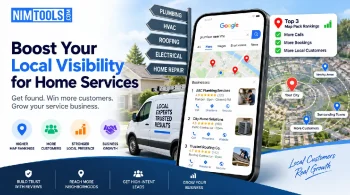
Without digital marketing, you will have no orders; therefore, this is a critical aspect of the business. We recommend talking to the best SEO agency in Sydney and let the experts put together a dynamic digital marketing plan that includes SEO, Pay Per Click and social media marketing. They implement the plan and monitor progress in real time and can make changes should that be necessary. Of course, you will need to talk to a local web designer, a professional who can design your digital platform, which represents the organisation on the Internet. The site should reflect what you are all about, and don’t forget to build social media pages on Facebook, X, Instagram and TikTok. If you are not IT proficient, your digital marketing agency partner can handle this.
A good digital marketing plan would cover the following:
- Search engine optimisation – Known as SEO, this is the art of boosting a website’s rankings within specific Google searches. If you can manage to get on page 1 of search results, you can expect a high volume of organic traffic to your landing page. Due to the ever-changing nature of the Internet, SEO work needs to be ongoing; therefore, you should set aside a monthly budget specifically for SEO. Click here to find out how Google measures and ranks websites.
- Pay-per-click advertising – This is a complex form of online marketing that involves real-time bidding for the best locations, and managing PPC campaigns is best left to the experts. With a top agency in your corner, you can expect a healthy return, and then you can create another campaign.
- Social media marketing – Source a leading Australian digital marketing agency and let their social media marketing team handle all your social media accounts. They can generate a large Facebook following over a period of time, and that would lead to sales enquiries. Facebook is the best social media platform for marketing, and if you use a digital marketing agency, you will get the best results.
When you make contact with an Australian digital marketing agency, they carry out an online audit to determine the strength of your current digital profile. This helps them to prepare a marketing plan that is designed around your business, and they present you with a proposal. Should you be in agreement, they will implement the plan and monitor the progress in real time.
Setting up an Office
Of course, your business needs a headquarters, from where you can manage your business empire, and if your budget is limited, you could create a home office using the spare room. All you really need to start is a desktop PC, a desk, a couple of office chairs, a printer and an Internet connection, and you are good to go! If you are looking at a larger project and you plan to hire office staff, look for suitable commercial premises and ask a fit-out contractor to quote for the project.
Funding
The number one reason why new businesses fail is a lack of funds, so you need to estimate the startup and make sure you have the money to cover that, plus running costs for at least the first 6 months. We also advise you to set aside a sum of money for emergencies, as you never know what the future holds. All it takes is a few unpaid invoices to put you in a serious predicament, and without a special fund, it could be the end of the business. If money is tight, you could take out a business startup loan with an online lender and repay the loan over 2-3 years.
Hiring Employees
Of course, it is critical that the people you hire have the right mindset, and rather than advertising in newspapers, we recommend using a leading recruitment agency. Let them know the qualities that you are looking for in employees, and they will source potential candidates and schedule interviews for you. Hiring staff brings with it a lot of liability, and it might be a wiser choice to outsource to 3rd party providers, which means that you are not directly hiring the workers; rather, you are entering into an agreement with another company, and the employees work for them. Outsourcing makes perfect sense, especially for a small business, and this is ideal for small businesses with limited resources.
Register the Business
You will need to register the business with the Australian government, and this will give you your ABN, which every business must have. There are a number of options, and you can find out more on the government website; then you can choose the right type of business registration. You will also need to connect with a local accountant and have them handle your bookkeeping and accounting, which needs to be done from the very outset. If you get behind with bookkeeping, this could cause serious issues.
Minimising Risks to the Business
We recommend taking out a number of insurance policies to protect the business; talk to an experienced business lawyer, and they can advise you accordingly. Without some form of insurance, you are taking a big risk, as anything can happen in business.
We hope that your business venture enjoys a level of success, and if you apply yourself 100%, there is every reason to expect that the business will develop over time, and this will lead to long-term security.